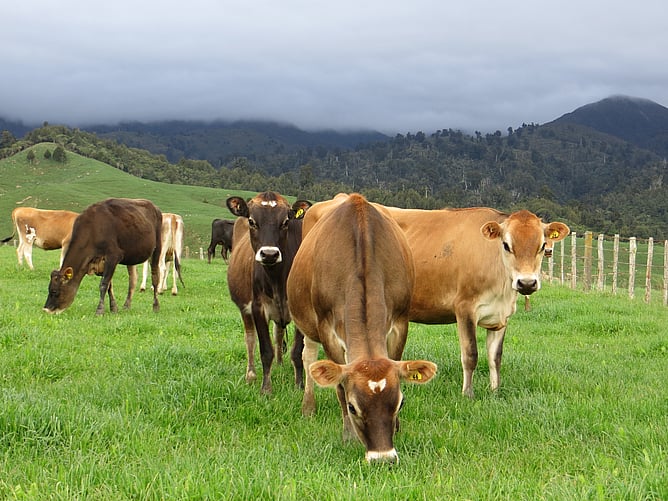
Heifers are the next generation of cows that will ensure that the herd’s population and performance remains consistent if not better.
One of the first and most important challenges heifers face is their first calving – the outcome of which can determine whether or not they become a productive member of the herd in the next seasons. This means that setting them up for reproductive success is crucial.
But what does reproductive success look like in a dairy herd? Heifers, and cows in general, must follow a reproductive cycle throughout the year: they must be able to conceive, carry a pregnancy to term, calve with minimal damage and issues, repair its uterus, resume cycling, be seen on heat, be inseminated, then conceive again. This reproductive cycle starts before our heifer’s first mating season.
So how do we help our heifers achieve reproductive success? There are two things that we generally consider when it comes to heifer mating management: weight and bull selection.
Heifer weight management starts at weaning. Replacement calves should be well grown (ideally 2.5-3x their birth weight) before they are weaned. This involves changing their diet from a milk-based diet to a pasture-based diet. Additionally, studies have shown that reproductive performance is directly related to the heifer’s liveweight at mating and calving. Below are some industry standard heifer growth rates to use as a guide.
Age | % Mature Liveweight | |
|---|---|---|
6 months | 30% | |
15 months (mating) | 60% | |
22 months (calving) | 90% |
It is important to note that lighter heifers have a higher chance of having calving difficulties compared to heifers with better BCS. Monitor your heifer’s growth rates regularly (ideally every 1-2 months) so that problems can be identified and addressed early!
Bull selection is the second most important factor when it comes to heifer reproductive success. Heifers are not fully mature during their first calving, so they are at a higher risk of calving problems, especially dystocia. To minimise this risk, inseminate or mate your heifers with smaller bull breeds such as Jerseys.
What heifer performance targets should we be aiming for? Top farmers will usually have 90% of first-calved heifers submitted for AI within the first 3 weeks of the heifer’s second mating season. A performance below 81% calls for an investigation on a farm’s calf and heifer management.
Heifers are our farm’s future. Treat them well, and you ensure your herd’s longevity!
Collaborate with your key vets to find more ways to achieve heifer reproductive success.
Sources: DairyNZ