Magnesium is an essential mineral in our body for everyday functions.
When we lack it in our diet, we can feel fatigued and get muscle cramps. Our cows need it too, and over the late dry period into next season’s milking is as important as ever.
While I have seen more cases of grass staggers in beef cows on lifestyle blocks than in dairy cows, I have still seen it in dairy cows when supplementation of magnesium is irregular, or dusted magnesium oxide has been washed away by rain.
Spring pasture is often low in magnesium, plus high in potassium which reduces the uptake of magnesium from the diet. This makes supplementing it over the calving period and early milking season especially important to support the health of our cows.
Magnesium deficiency in cows can lead to two diseases:
Grass staggers - this is a straight magnesium deficiency, often seen as nervous cows with a stiff gait. It can progress to a down cow having seizures, with the whole body becoming rigid, often followed by death within minutes as the heart muscle is affected. Grass staggers can occur in dairy or beef cows, both pre- and post-calving, but is most commonly seen soon after calving.
Milk fever – this can be caused by low magnesium, as it is required to make the hormone that tells the body to mobilise calcium from the cow’s bones.
Supplementation options
There are a number of ways of supplementing magnesium, including daily drenches, dusting magnesium oxide on pasture or hay, adding magnesium chloride or sulphate to trough water, or administering magnesium intra-ruminal bullets.
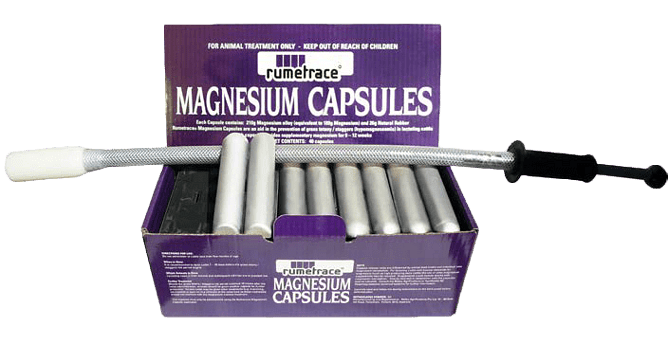
Rumetrace magnesium bullets provide some magnesium supplementation for 9-12 weeks. These are not suitable as a sole source of magnesium for dairy cows, but are useful for carry-over cows and beef cows that are not handy for daily application methods, such as at a runoff.
It is recommended to start magnesium supplementation 2-3 weeks pre-calving, and continue through to December, when the grass is more mature.
Finding the right supplementation option for you is important. We’d be happy to help if you would like some more advice on this.