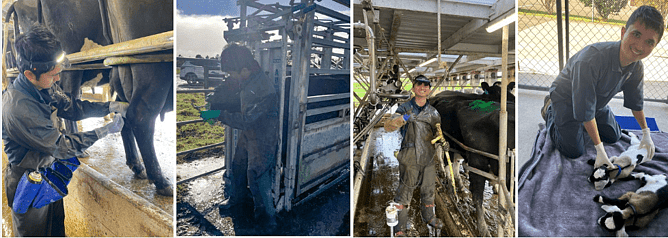
Oscar originally joined us as a new graduate in early 2023 and, through his strong clinical work and growing experience, has recently taken on the role of Clinical Large Animal Lead - adding a bit more paperwork alongside his work as a busy farm vet!
He is passionate about proactive animal health and is also a great resource for Filipino staff on farm, able to speak both major languages and help bridge any communication gaps.
Fellow production animal vet Jackie caught up with Oscar to dig a little deeper into his background and what he brings to the team...
Oscar, what first inspired you to become a vet?
I grew up in rural Philippines, where we always had cats, dogs, chickens, and pigs, and would also see a lot of water buffaloes working in the rice paddies. That sparked my love for animals at a young age.
I initially began studying engineering, but soon realised it was not something I wanted to do and, when I got the opportunity to go to vet school here in New Zealand, it solidified that career choice for me. It was a big change, moving from a different country and also going 180 degrees from doing maths to treating animals, but it was the right move!
What attracted you to Vet Clinic Morrinsville?
I did my student placement here back in 2021 and loved the team dynamic and culture. The wider Morrinsville community was also amazing - very tight-knit and very much centred around promoting local businesses and making connections, which reminded me a lot of home.
Being quite central to a lot of cool places – such as Hamilton or Auckland (where my parents are based), and the beach, was a bit of a win too!
What is the best part of being here now?
For me, that sense of community, family, and laying down roots is still the reason I love it here. I met my wife here in Morrinsville, which provides definite motivation to stick around even longer!
What is one thing you wish all farmers knew about Vet Clinic Morrinsville, or yourself?
That we have an amazing team of vets, techs, and support staff here at Vet Clinic Morrinsville. We have lots of laughs here in the clinic and love to engage with clients and people in general. I would say to farmers, do not hesitate to come and have a quick yarn in the clinic - we are a cool bunch!
Something about myself is that I can speak the two major languages in the Philippines. This is really useful for farmers who have Filipino workers, as I can help translate some of the finer details of dairy farming to them, and help them to feel comfortable asking questions, or raising something that they cannot quite articulate in English.
What are some key learnings you have had on the job as a large animal vet?
The importance of clear communication with the farmers to help make sure we get the best outcomes.
Are there any common misconceptions about being a vet you would like to correct?
A common misconception might be that we are just out to make money. The majority of vets are genuinely concerned about the animal's health, which is why we recommend doing a lot of proactive things, like vaccinations, blood testing, and routine work. Some of it might seem like just an ‘extra job’, but it will actually help with future-proofing your animals.
It sucks for us when we scan empty animals, as we are left wondering if there was something we could have done in the season to give her a better chance of getting in-calf and staying in the herd.
What is your favourite job at work, and why?
I really enjoy lancing cow abscesses! I know it is a very stereotypical thing to say as a vet, but the bigger, the better. I like them chunky or runny, strawberry-coloured, or custard-coloured - the works. I love a good abscess!
What is a piece of equipment you could not live without?
I love the plasterer's stilts that we can use to increase my height! I will not part with them. The clinic will have to rip them off my cold, dead feet.
What do you think is the biggest challenge facing vets in the next five years?
The biggest challenge, especially for a production animal vet, is the rapid rise of urbanisation. A lot of good land is being subdivided for housing, or switching to horticulture, so there might not be as many farms to actually service within the next 5 to 10 years.
Finally, when you’re not vetting, what do you enjoy doing?
When the days are nice and sunny, I love going on walks, going to the beach, or doing short tramps. I’ve not quite moved up to doing multi-day hikes, but hopefully will in the future. If it is a more gloomy, rainy day, I also love staying at home, watching a good movie, or playing video games.
Overall, I really love hanging out with people. To me, it is more about the people than the activity, so I am usually up for anything.
Thanks to Oscar for his insights into being a large animal vet here in Morrinsville, and our team culture at VCM. I plan to bring some more interviews to you in the coming months...