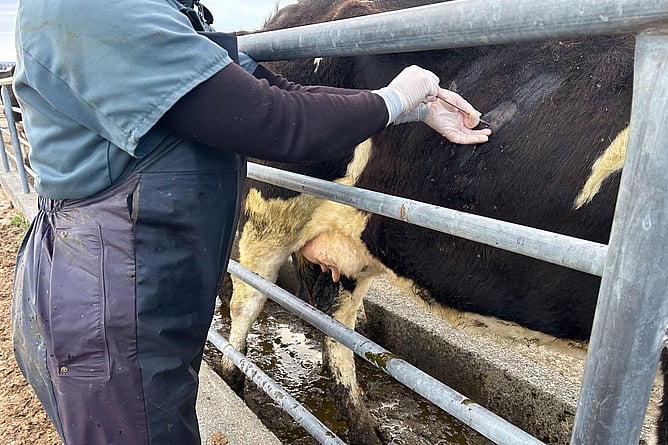
What is a liver biopsy?
It's a procedure performed under local anaesthetic to retrieve a small piece of liver tissue. We typically biopsy 10 random cows of variable age and production status from a herd, to get a sample that represents the farm as a whole.
Why do liver biopsies?
Copper is very important for health in cows, contributing to milk production, fertility, foetal development, immune function, and growth. A deficiency can affect these processes, and therefore the overall productivity of a farm.
Although copper can be tested for in the blood, these levels only represent recent copper intake and typically will not fluctuate until the liver's stored copper is depleted. The liver is the main place where copper is stored in a ruminant’s body, acting as a buffer between excess and deficient intakes of copper over the year. By taking a liver biopsy we can assess the long-term availability of copper, which is a more accurate indicator of copper needs. We can also look at the levels of selenium and B12.
With these test results, you can then target appropriate trace element treatment – particularly if a deficiency is found. At the other end of the spectrum, results could also show excess copper levels, in which case supplementation would not be needed and may even be dangerous. Liver biopsies help you make informed decisions without guesswork.
When to get liver biopsies?
Autumn is the best time to test trace element levels in the liver, as it's during this time that pasture starts to lack copper. No year is the same as the last either, so we recommend getting liver biopsies done annually to check whether trace element supplementation is required.