Mating season is upon us, and bulls are usually one part of the process of having a good mating season.
Having enough bull power for when it is needed is very important, so that overworked bulls do not let in-calf rates down. Bulls can get injured, sick or lame, so it is important to have 2 bull teams to alternate to be able to rest them, and as spares for when bulls get injured.
The number of bulls required depends on how many cows you expect to not be pregnant after your AB period finishes. A good calculation is if you work out how many cows are still to get in calf, then times by 3%, rounding it up to get the number of bulls, with a minimum of 2 bulls in at one time.
After a non-cycler program, cows become synchronised, and most cows will come back on heat 18-21 days after the initial mating (if it didn’t hold). A ratio of 1 rested bull per maximum of 10 cows is recommended, or some people bring back the AI technician for those days.
Yearling heifers are less obvious in their heats, and the bulls need to go looking for them, so 1 bull per 15 to 20 heifers is recommended.
Bulls that do not work well can be costly; keeping them in groups and swapping bulls help to reduce the risk that bulls who are infertile or unable to serve cows impact in calf rates.
Surveys in the past have shown that 15 % of yearling bulls and 20% of mixed age bulls would fail breeding soundness exams - when scrotal contents, semen quality and mating ability were looked at. Watching bulls mounting ability when mating is a good minimum check.
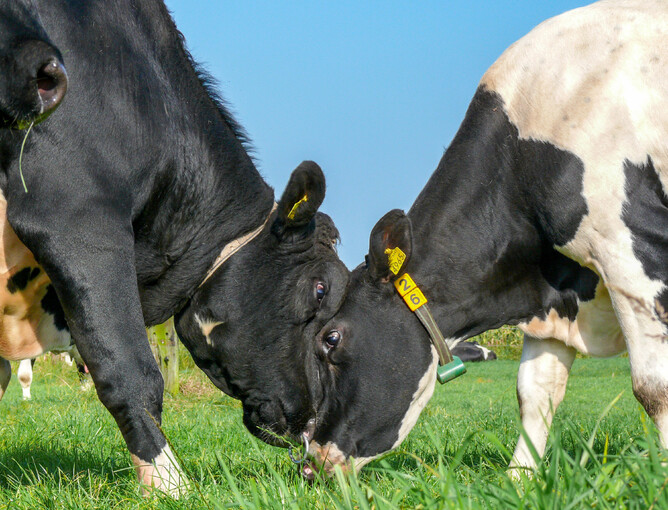
Keeping bulls in their own group and not mixing them helps to reduce fighting - thus reducing injuries and bulls being distracted from their main duties!
Hopefully everyone has checked that their bulls have had a recent annual BVD/IBR (Hiprabovis, UltravacBVD) vaccination, and were blood tested for BVD before first purchased. This helps reduce the risk of disease being spread through the herd at mating time, impacting fertility. Other diseases such as pink-eye can also be introduced to the herd by bulls, so ensure they all look healthy before bringing them on farm, and ideally quarantine for 2-4 weeks to allow any diseases they are incubating to be seen.
Lame bulls are always a problem. Their hooves are often soft and bruise easily, especially if mounting cows or fighting while going down the race or in the yard. Try to train bulls to stay in the paddock, or at minimum keep them off the yard during milking.
Remember that the genetics of the bull do matter- for birth weight and gestation length, and checking that the bull is a suitable size for the cows it will be used on is important.