
Did you know your pet's teeth need the same dental care and attention that you give your own?
Nothing warms your heart more than your happy, smiling dog welcoming you home at the end of the day.
Just like us, to keep that happy smile, cats and dogs rely on healthy teeth and gums for their overall health and wellbeing.
The build-up of dental plaque (a sticky film of bacteria that constantly forms on the teeth) can lead to oral health issues in your pet, such as gingivitis, periodontal disease and tooth loss.
Even relatively young pets can develop dental disease
According to the American Veterinary Dental Society, more than 80% of dogs and 70% of cats show signs of oral disease by the time they are three years old.
While minor dental disease causes little distress to pets, as it progresses, discomfort and pain develop. This is often not recognised by the owner, due to our animals' ability to mask this pain.
Regular dental care, including professional cleaning by your vet, is important for preventing dental disease in cats and dogs. We can also take preventive measures, such as daily toothbrushing, special dental diets and providing appropriate chew toys or dental treats.
Things you can do at home to look after your furry friends smile:
Brushing your pet's teeth is the most effective way to care for their teeth at home. Studies have shown that cleaning your pet's teeth once a week can reduce dental disease by 70% and twice a week by 93%. We recommend brushing daily to make it a habit.
Cleaning your pet's teeth with a pet-friendly toothbrush and toothpaste will help to prevent plaque and tartar buildup. It can take a while for your pet to get used to having their teeth brushed. Start by smearing a dot of toothpaste on your finger, then rub it on their teeth. Once they're comfortable, try using a muslin cloth with the toothpaste to clean their teeth. If that's going well, then it's time for the toothbrush.
There are special dental diets formulated to help reduce tartar buildup. The most effective kibbles physically clean the teeth, due to their structure.
Dental chews and toys can help keep teeth clean. Some dental treats contain additives to help reduce plaque and tartar buildup.
Water additives that have been formulated to freshen up your pets’ teeth and help prevent the buildup of plaque and tartar can be put into your pets’ drinking water.
Early diagnosis and treatment of dental issues is important
The earlier they are addressed, the less likely they are to cause permanent damage to your dog or cat. Early treatment is also better for your pet as it is less invasive.
This is also more cost effective in the long term. By investing in regular dental check-ups and professional cleaning for your pet's teeth, you can avoid costly dental procedures and other complications that may arise from untreated dental diseases.
How often they need a professional cleaning will depend on your pet. Some dogs require a clean every six months, while others may only need one every three years. Your vet can advise you on this.
Severe dental issues, such as fractured teeth, can also be caused by feeding bones or providing chew toys that are too hard. As a good rule of thumb, if you cannot dent it with your fingernail, it is too hard.
By maintaining good oral hygiene in our pets and prioritising regular dental care, we can help them enjoy a longer, happier and healthier life (and we can enjoy some cuddles without the fear of bad breath!).
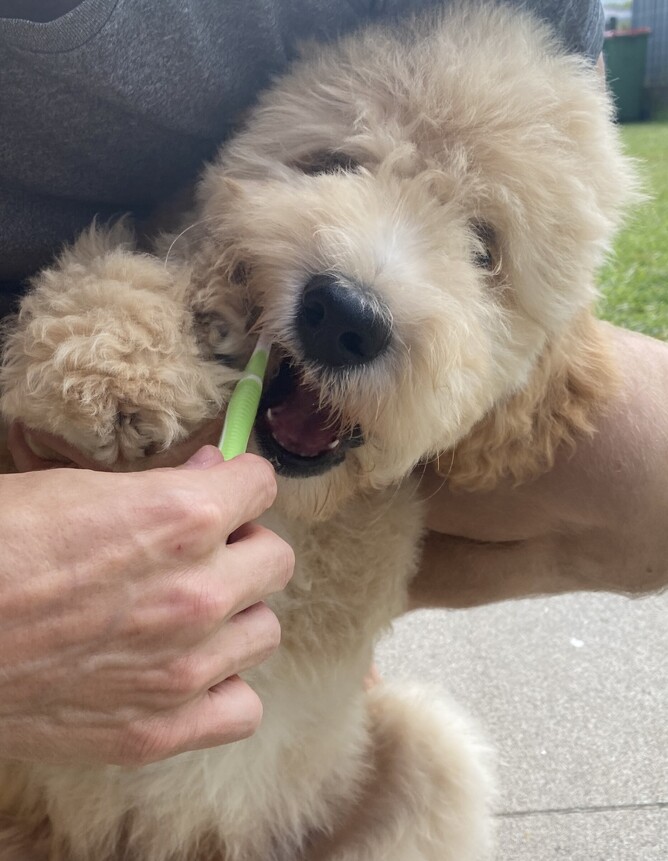
Scout enjoys getting his teeth brushed
This article was originally published by VetSouth. As a trusted partner of Vet Clinic Morrinsville, we're proud to share their expertise with our community.